How to Track Your Vitamin Levels at Home - Without Blood Tests

For most people, checking vitamin and mineral levels means one thing: a trip to the doctor, a blood draw, waiting for results, and then booking a follow-up appointment to discuss them. It's time-consuming, sometimes uncomfortable, and not something most people do more than once or twice a year - if that.
But nutritional status isn't static. Your vitamin and mineral levels shift with the seasons, your diet, your stress levels, your activity, and your age. A single annual blood test gives you a snapshot, not a picture of trends over time.
This is why more people are exploring ways to monitor their nutritional health at home - regularly, easily, and without the inconvenience of clinical testing.
Why Regular Monitoring Matters
A deficiency that's caught early looks very different from one that's been developing for months or years. In the early stages, the body compensates quietly - drawing on stored reserves, adapting its processes. Symptoms are mild or absent. But over time, as reserves deplete, the impact becomes harder to ignore: persistent fatigue, weakened immunity, mood changes, bone loss, cognitive decline.
The problem is that most people only seek testing when symptoms are already significant. By then, correcting the deficiency takes longer, and the effects may have already accumulated.
Regular home monitoring changes this equation. Instead of reacting to symptoms, you can observe trends - noticing when certain vitamin or mineral levels start to drift, and adjusting your diet or supplementation before the effects become felt.
How Home Vitamin Tracking Devices Work
One of the most innovative approaches to home nutritional monitoring uses a method called EAV - Electroacupuncture According to Voll - developed by German physician Dr. Reinhold Voll in the mid-20th century.
The EAV method is based on the observation that specific points on the skin - corresponding to nerve endings connected to organs and body systems - exhibit measurable changes in electrical conductivity when the associated system is under stress or out of balance. By measuring conductivity at these acupuncture points, the device can indicate trends in the body's vitamin and mineral status.
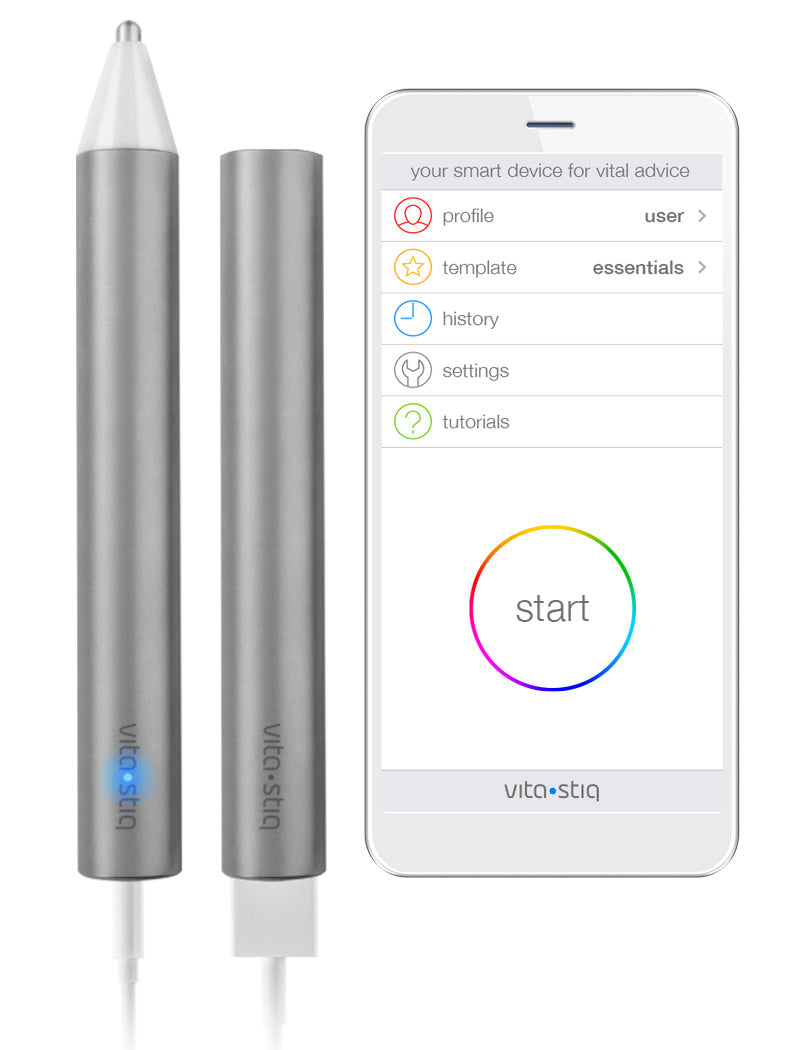
Modern devices like Vitastiq have brought this methodology into an accessible consumer format. The Vitastiq pen connects to a smartphone app and guides users through measuring 26 vitamins and minerals via specific points on the fingers. The process is non-invasive and painless - no needles, no blood, no laboratory.
The result isn't a precise numerical value (as you'd get from a blood test) but rather an indication of trend: whether a particular vitamin or mineral appears to be in a healthy range, low, or high. Used consistently over time, this allows you to observe patterns and changes that would be invisible from a single test.
What You Can Track
With a device like Vitastiq, you can monitor trends across 26 essential nutrients, including:
Vitamins A, C, D, E, K2, and the full B complex (B1, B2, B3, B6, B7/Biotin, B9/Folate, B12), as well as minerals including calcium, magnesium, iron, zinc, selenium, iodine, copper, chromium, potassium, and Coenzyme Q10.
This covers the full spectrum of nutrients most commonly implicated in deficiency-related health issues.
Who Is Home Monitoring Most Useful For?
Home vitamin tracking is particularly valuable for:
People who feel persistently unwell without a clear diagnosis. If you're tired, foggy, or low in mood and conventional testing hasn't revealed a cause, nutritional status is worth exploring.
Those on restricted diets. Vegetarians, vegans, and people with food intolerances are at higher risk for specific deficiencies and benefit from more frequent monitoring.
Families. Devices like the Vitastiq Family Edition allow multiple users to be tracked on a single device, making it practical to monitor the nutritional health of everyone in the household - including children and older family members.
People managing chronic conditions. Many medications and health conditions affect nutrient absorption. Regular monitoring helps identify and address these effects early.
Health-conscious individuals. For those who already invest in their well-being through diet, exercise, and supplementation, home monitoring provides a way to verify that those efforts are actually having the intended effect.
Home Monitoring vs. Blood Tests: How They Compare
Home devices and blood tests serve different but complementary purposes. Blood tests provide precise, quantified measurements of specific biomarkers - they are the gold standard for diagnosis and should always be the first choice when a serious deficiency is suspected or when a medical decision depends on the result.
Home monitoring devices provide something different: accessible, regular trend tracking that fits into everyday life. They're not designed to replace medical testing, but to complement it - giving you a consistent view of your nutritional health between clinical appointments, and helping you identify when a more thorough investigation might be warranted.
Think of it like the difference between a doctor's blood pressure measurement and a home blood pressure monitor. The home device doesn't replace clinical care, but it gives you valuable information on an ongoing basis.
Getting Started
If you're interested in tracking your vitamin and mineral levels at home, the most important thing is consistency. A single measurement tells you very little. Regular measurements over weeks and months reveal meaningful trends.
Choose a time of day to measure, follow the device instructions carefully for accurate calibration, and keep a log of your readings alongside notes about your diet, sleep, and energy levels. Over time, this creates a picture of your nutritional health that no single test could provide.
Your body is constantly communicating with you. Home monitoring is simply a way to start listening more carefully.